

Regency Marketing × Ashley Furniture
“DJ Reese is fantastic. We have been using him for our Corporate Promotional Events. Often we find DJs tend to want to put their own spin on things, but not what we’re looking for. After explaining the type of music and the overall vibe of the day, DJ Reese was able to deliver just what we needed. He’s very easy to work with from booking through payment and execution — so much so that we have booked him for all of our remaining events in 2025.”
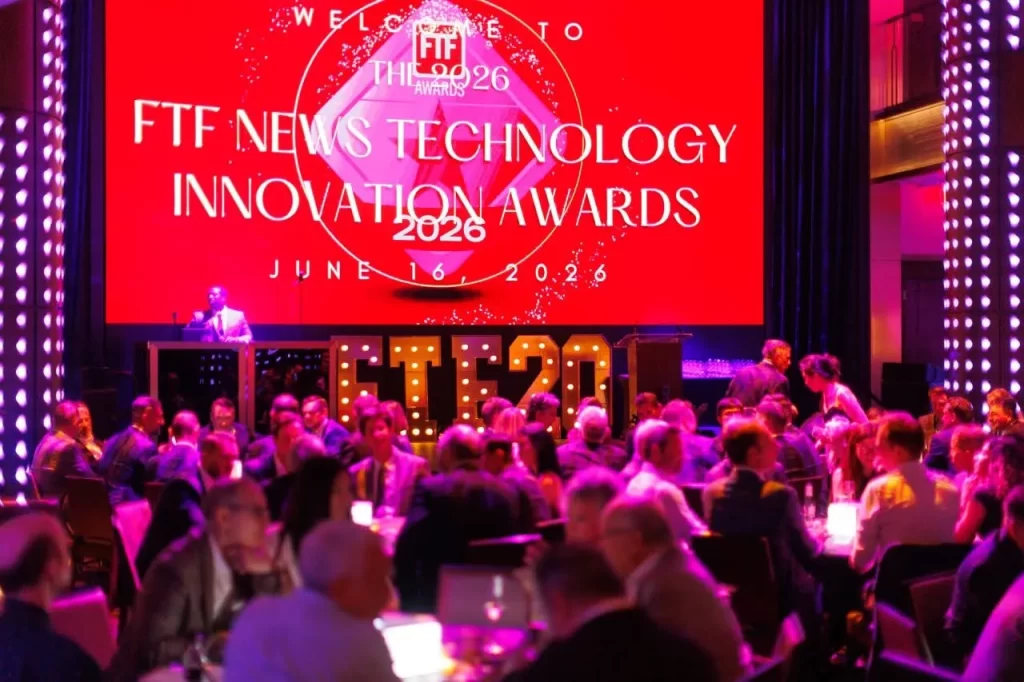
“We hired DJ Reese to DJ our Awards event in NYC, and he truly was the best corporate DJ we’ve ever worked with. Professional, responsive, easy to communicate with. He helped take our event up a notch — our clients loved the songs he chose for their walk-up music.”
“We had a fantastic experience working with DJ Reese. From start to finish, everything ran smoothly, professionally, and exactly as expected for a fundraising event. He did an excellent job managing both the DJ and emcee responsibilities.”
“We had DJ Reese at our Dream Team Member Gala, and it truly made the night unforgettable as we came together to celebrate our team at RMS. The music, sound, and energy were outstanding.”
“DJ Reese made our New Year’s Eve Party spectacular at Great Wolf Lodge Perryville. He was flexible, communicative, and so easy to work with. His song choices were perfect for our audience and he kept the party going all night.”
Corporate DJ Services for Corporate Events, Nationwide
Professional, brand-safe corporate DJ entertainment for conferences, galas, company celebrations, and experiential events nationwide.
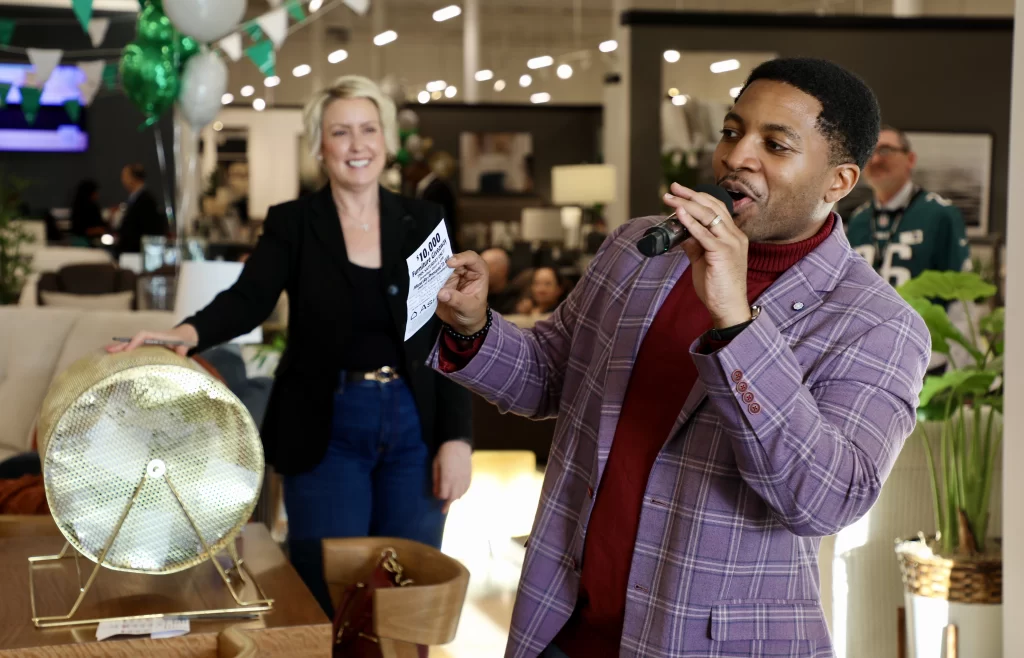
Corporate events require precision, adaptability, and an understanding of audience dynamics. We provide seamless DJ and MC support that enhances your program, supports your run of show, and protects your brand experience from start to finish.
Conferences & Summits
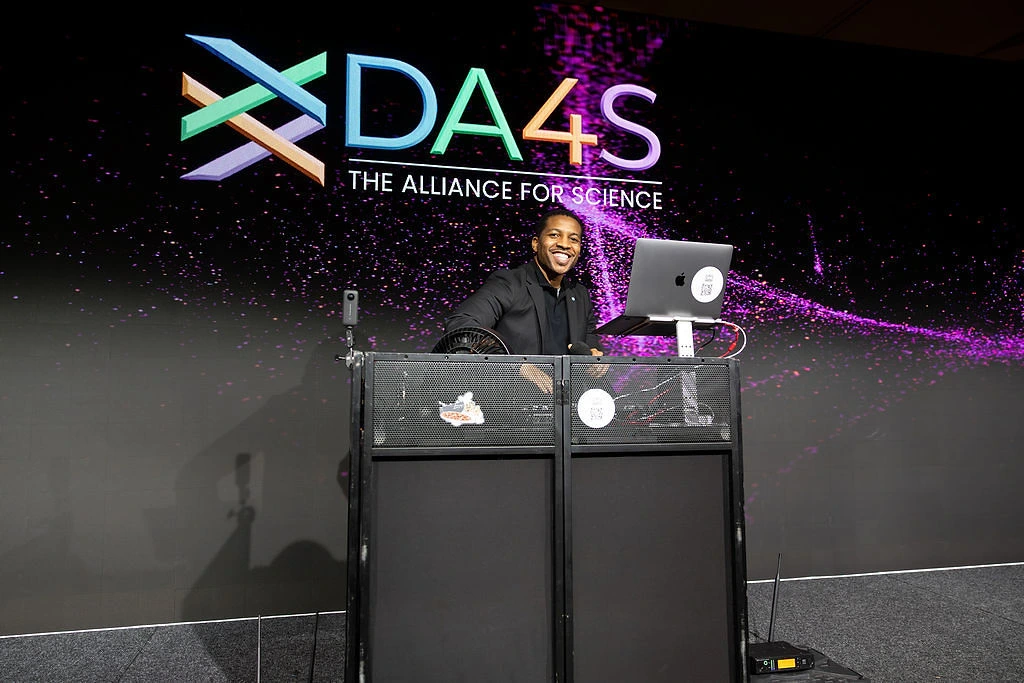
Professional Corporate Event DJ support for keynote transitions, networking sessions, and breakout environments. We maintain energy while staying aligned with your agenda and speaker timing.
Galas & Award Ceremonies
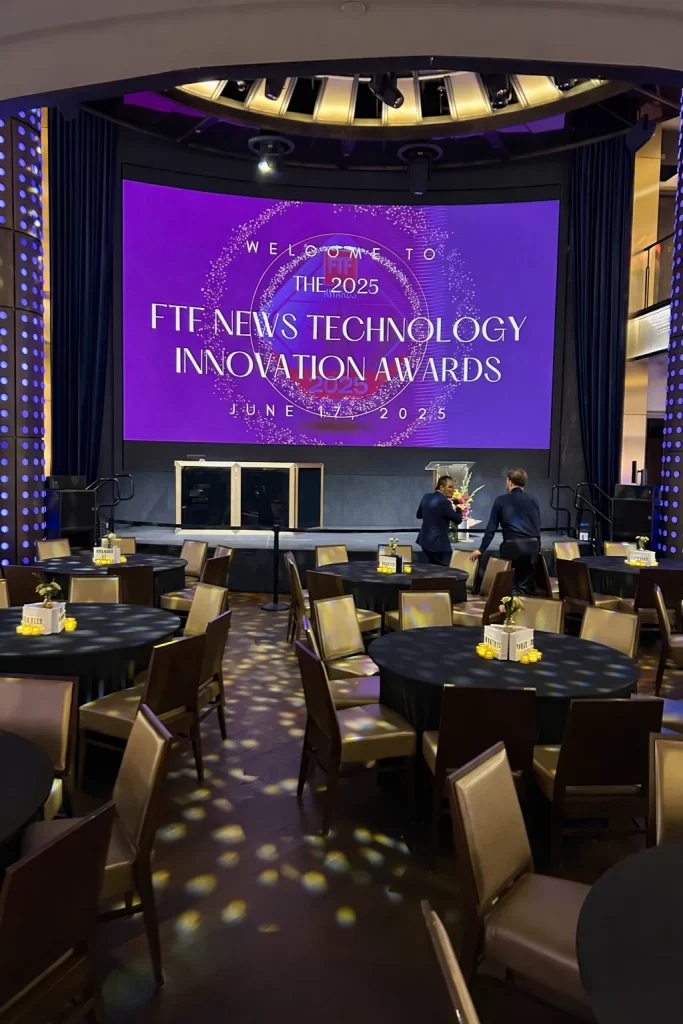
Elegant, polished entertainment for formal corporate evenings. Every transition is timed precisely to ensure a seamless and prestigious experience.
Company Celebrations

High energy corporate event DJ services tailored to your company culture. We balance fun and professionalism so employees enjoy the event while maintaining brand tone.
Brand Activations & Experiential Events
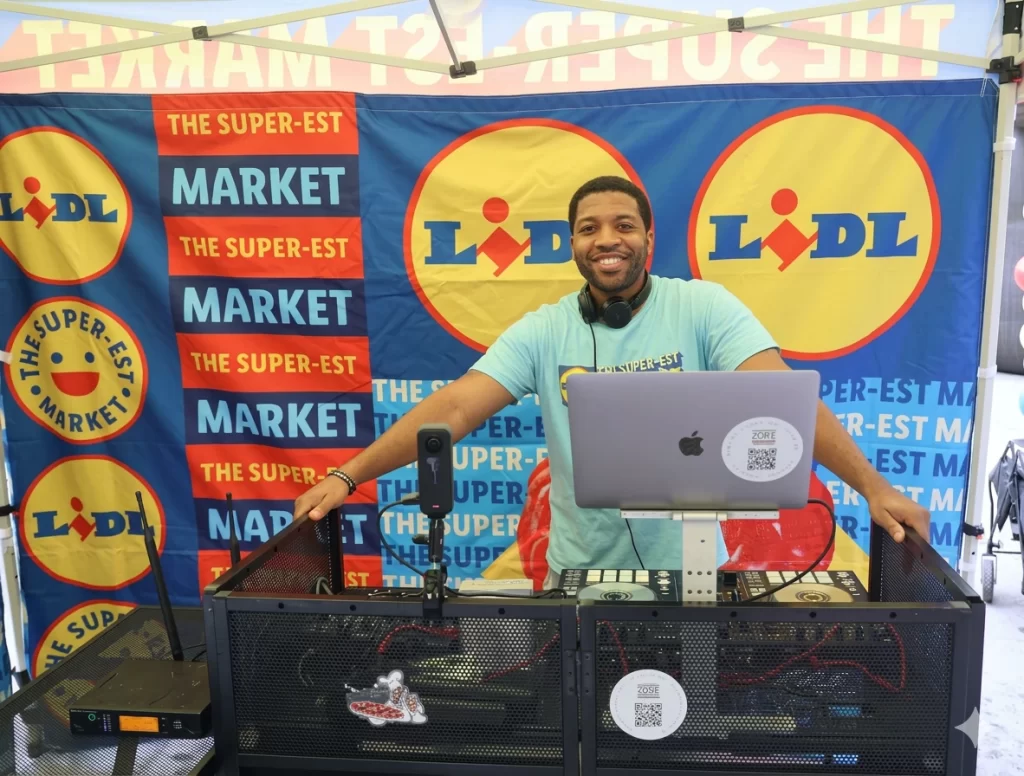
Dynamic music support for product launches and immersive marketing experiences. We collaborate with production and experiential teams to amplify audience engagement.
Executive & Private Corporate Functions

Discreet, brand appropriate entertainment for leadership events, private dinners, and high profile gatherings.
Sales Kickoffs & Corporate Meetings
High energy MC and DJ coverage for annual sales kickoffs, national sales meetings, and incentive events, built to sustain momentum across multi-day agendas.
Built for High Stakes Corporate Environments
- Seamless coordination with planners and production teams
- Brand safe music programming
- Professional appearance and communication
- Adaptability to changing schedules
- Nationwide availability
Corporate Event DJ Services Designed Around Your Business Goals
Not every DJ offers corporate event DJ services worth hiring. Most treat corporate gigs like weddings with a dress code — show up, play music, collect a check. No Stress Zone Entertainment is built differently. Every service we offer is designed to serve one thing: your event’s objective. Whether that means driving energy at a product launch, setting tone at an executive retreat, or keeping a 3-day conference audience engaged through Day 2 at 4pm, we build the experience around your outcome.
What Our Corporate Event DJ Services Include
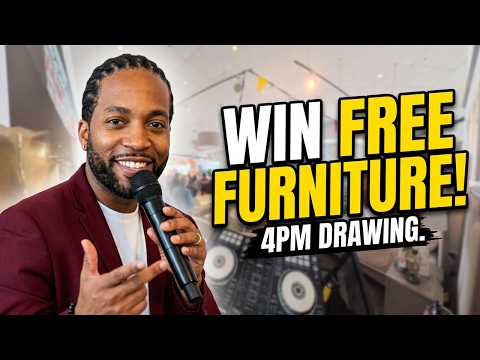
Our corporate event DJ services go well beyond music selection. DJ Reese serves as both DJ and professional MC, giving your event a single point of control for sound, energy, and audience engagement. Services include pre-event consultation and timeline review, custom music programming by audience profile, professional MC hosting and transitions, live crowd reading and real-time energy management, and post-event debrief.
Corporate Event DJ Services by Event Type

No Stress Zone Entertainment provides corporate event DJ services across a full range of corporate formats. We specialize in conferences and summits where attention spans are taxed and transitions matter, galas and awards dinners where music sets tone for recognition moments, company celebrations and milestones where energy needs to be high without losing professionalism, brand activations where the DJ is part of the brand experience, and executive and private corporate functions where discretion and precision are non-negotiable.
Guides for Specific Event Scenarios
Some corporate events come with their own playbook. We’ve broken down what changes for a few of the trickier scenarios: conference DJ services, opening gala nights, board dinners, IPO celebrations, trade show floors, corporate holiday parties, service day events, and what changes when you’re rebooking a vendor you’ve worked with before.
National Corporate Event DJ Services

Our corporate event DJ services are available nationwide. DJ Reese regularly performs at corporate events in New York City, Washington DC, Philadelphia, New Jersey, Atlanta, Los Angeles, and across the country. If your event matters enough to get right, location is never a barrier. We travel where the work is — and we show up prepared.
Why Corporate Event Planners Choose Our Corporate Event DJ Services
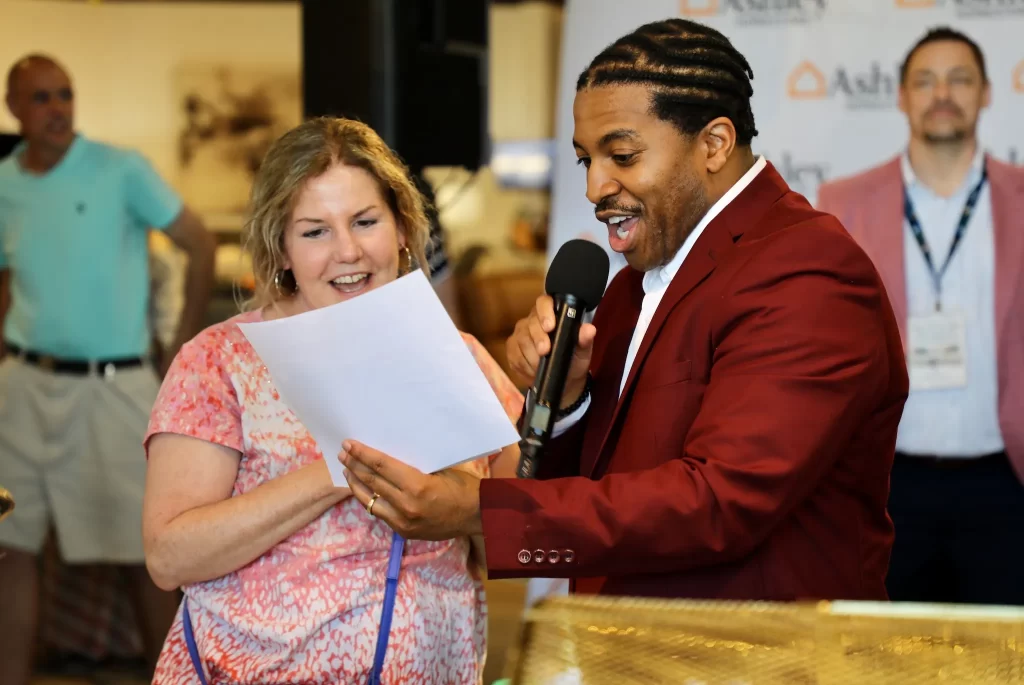
Corporate event planners, meeting professionals, and experiential agencies choose No Stress Zone Entertainment because they need a partner, not a vendor. DJ Reese comes in with a full understanding of your event’s purpose, your audience’s expectations, and your schedule’s non-negotiables. He reads the room in real time and adjusts before a dip ever becomes a problem. That’s what truly professional corporate event DJ services look like.
Our corporate event DJ services are trusted by planners affiliated with the Meeting Professionals International (MPI) and the Professional Convention Management Association (PCMA). These industry bodies recognize that professional corporate event DJ services require specialized skills beyond traditional DJ performance.
Every Corporate Event DJ Services package from No Stress Zone Entertainment is built around your specific event objectives. Our Corporate Event DJ Services adapt to the culture of your organization, the expectations of your audience, and the goals your leadership team has set for the event experience.
What Makes No Stress Zone Corporate Event DJ Services Different
Most event planners have experienced the moment when a room goes flat — a silence between speakers, a song that doesn’t land, a transition that kills the energy. Our Corporate Event DJ Services exist to make sure that moment never happens at your event. DJ Reese reads the room in real time and adjusts before a dip becomes a problem. That’s not a feature. That’s the entire philosophy.
Our Corporate Event DJ Services are built around one core belief: entertainment should serve the business goal first. Whether the objective is to energize a sales kickoff, set a sophisticated tone for a gala, or keep networking sessions moving, the music and hosting choices are always made in service of the outcome — not the playlist.
Frequently Asked Questions About Our DJ services
How far in advance should we book DJ services?
For large-scale conferences and galas, we recommend booking 3–6 months in advance. DJ services for smaller company celebrations or executive dinners can often be arranged within 4–6 weeks, depending on availability.
Do you provide MC services alongside DJ services?
Yes. Our DJ services are fully integrated with professional MC hosting. DJ Reese functions as both — managing the room’s energy through music while anchoring transitions, introductions, and audience engagement moments live on the microphone.
What types of corporate events do you serve?
Our DJ services cover conferences, galas, award ceremonies, company celebrations, product launches, executive retreats, networking events, and annual meetings. If it requires a room full of people to feel something and remember it, we’re built for it.
Do you travel for events outside your home market?
Absolutely. Our DJ services are available nationwide. We’ve served clients in Atlanta, Los Angeles, Philadelphia, Washington D.C., New Jersey, and across the country. Travel and logistics are handled as part of every booking conversation.
Ready to bring No Stress Zone DJ services to your next event? Contact us to start the conversation.
What DJ services Include Beyond Music
When most people think about DJ services, they think about music. But the value of professional DJ services extends far beyond what is playing through the speakers. It includes the pre-event strategy consultation that shapes the entire entertainment plan. It includes the music curation process that aligns the sonic environment with your brand, your audience, and your event objectives. It includes the real-time decision-making on event day that keeps the program moving and the room engaged even when unexpected things happen.
No Stress Zone Entertainment delivers DJ services that encompass all of it. Every engagement begins weeks before the event with a detailed consultation. We review your run of show, your speaker lineup, your audience demographics, and your success criteria. We build a music strategy around those inputs. On event day, we execute that strategy while reading the room constantly and adjusting in real time.
DJ services for Different Event Scales
Our DJ services scale to fit events of any size. An intimate executive dinner for 40 people has different requirements from an annual company gala for 800. A regional sales kickoff for 150 operates differently from a national conference for 2,500. What stays consistent across all of them is the level of preparation, the quality of music programming, and the real-time intelligence we bring to managing the room.
Smaller events often require a more nuanced approach than larger ones. In a room of 40 people, every musical choice is more audible, every energy decision is more visible, and the margin for a misstep is smaller. Our DJ services treat small events with the same strategic seriousness as large-scale productions.
Choosing DJ services That Serve Your Business Goals
Entertainment at a corporate event is not decoration. It is a business tool. The right DJ services contribute directly to your event outcomes — higher attendee engagement, stronger emotional connection to the brand or organization, better energy in the room during networking and award presentations, and a lasting impression that reflects positively on the host.
The wrong entertainment decision creates the opposite effect. Attendees disconnect. Energy dips in the room go unmanaged. Transitions between program elements feel awkward. The event ends, but it does not land. Choosing DJ services based on price alone is how that outcome happens. Choosing based on demonstrated experience, preparation standards, and real-time intelligence is how you get the first outcome.
FAQ: DJ services
What types of organizations hire your DJ services?
We work with corporate event planners, meeting planners, association managers, marketing directors, experiential agencies, and in-house event teams at companies ranging from startups to Fortune 500 organizations. Any organization running a professional event where the standard is high and the margin for error is low is a potential fit.
Do your DJ services include technical equipment?
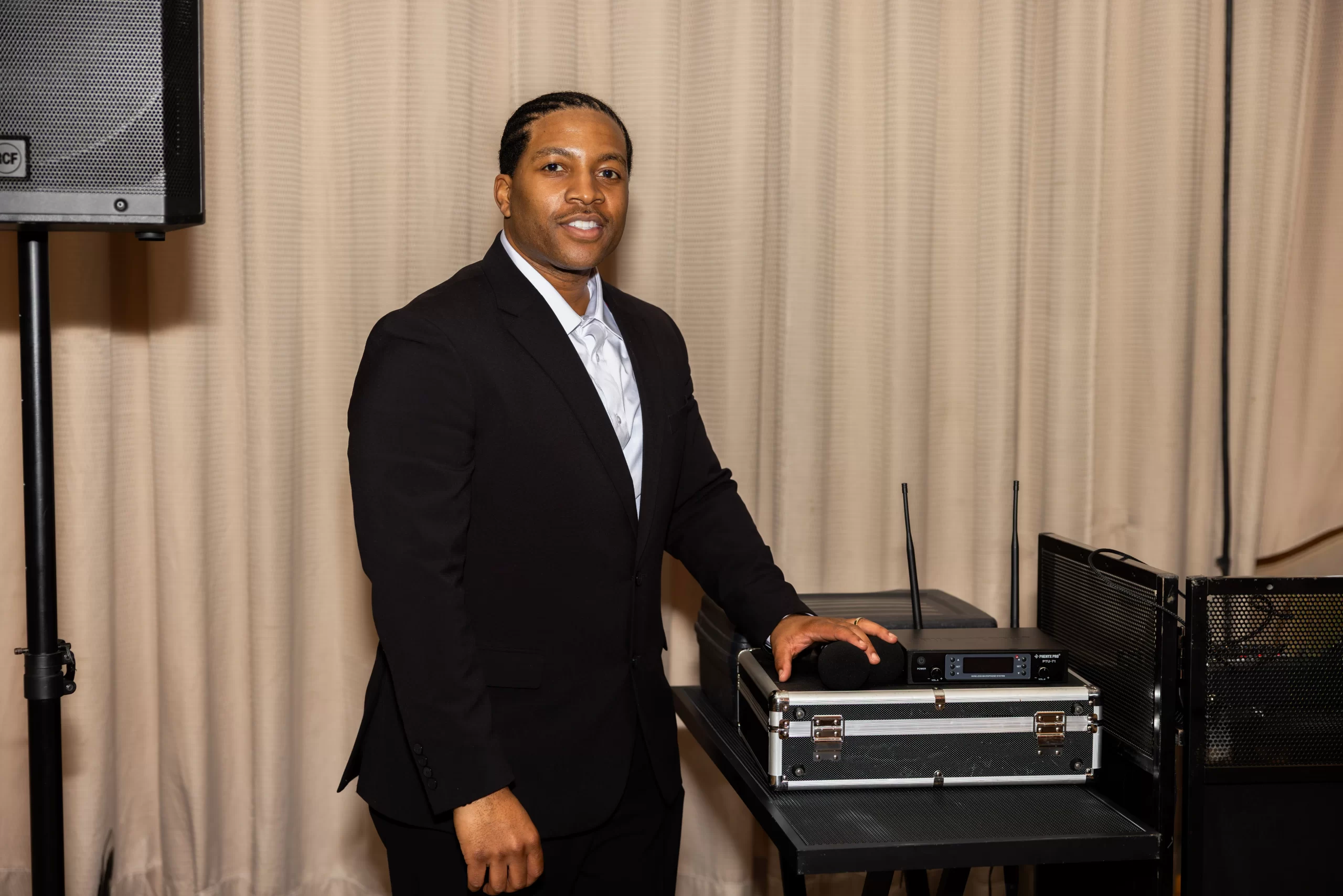
Yes. We bring professional-grade audio equipment to every engagement and coordinate with your venue and AV team to ensure technical compatibility in advance of the event. We do not leave equipment decisions to the day of the event.
Why These DJ services Work
DJ services executed with operator discipline produce measurable outcomes. Attendee engagement lifts. Sponsor renewal improves. Rebooking rates climb because clients trust the delivery.
Every corporate event DJ services booking goes through the same intake framework. Discovery call. Room walk through. Run of show alignment. Emcee coordination call. On site setup with backup gear.
That framework is the difference between corporate event DJ services that clients recommend and generic booking that clients forget.
According to Meeting Professionals International, entertainment quality now ranks in the top 5 factors driving corporate event attendee satisfaction. That elevation makes disciplined corporate event DJ services strategic.
For related context, see corporate DJ rates 2026 pricing guide and how to hire a corporate DJ.
Vertical Focus for DJ services
Corporate event DJ services span multiple event verticals. Sales kickoffs. Conferences. Product launches. Award ceremonies. Gala fundraisers. Each vertical has different rhythm, tone, and technical needs.
Sales kickoff corporate event DJ services need high energy openings, motivational transitions, and celebration closings. That format supports the commercial mission of the event.
Conference corporate event DJ services need session transition support, break area ambient music, and cocktail hour energy. That format supports attendee networking and content flow.
Product launch corporate event DJ services need dramatic reveal moments, brand aligned playlists, and sponsor coordination. That format supports the marketing outcomes of the launch.
Corporate Event DJ Services Booking Timeline
Book corporate event DJ services 90 days minimum before your event date. Peak season events (Q4) should book 6 months out. Complex conferences and multi day activations need 6 to 12 months of lead time.
The 30 days before your event, corporate event DJ services confirmation includes final run of show for corporate event DJ services, venue walk through if needed, and gear list confirmation.
Day of, corporate event DJ services execution follows the pre approved playbook. Setup 3 to 4 hours before doors. Sound check at 60 minutes. Emcee coordination at 30 minutes. Then the show. Corporate event DJ services delivered as designed.
Also see executive event entertainment for higher tier scoping.
Corporate Event DJ Services Pricing Structure
Corporate event DJ services pricing depends on scope. Small internal events run $1,500 to $3,500. Mid market events run $3,500 to $7,500. Enterprise conferences run $7,500 to $15,000. Flagship national activations run $15,000 to $30,000+.
Every corporate event DJ services quote includes transparent scope breakdown. Operator fee. Gear rental. Travel if applicable. Coordination overhead. No hidden markup categories.
Multi event contracts on corporate event DJ services unlock 15 to 25 percent savings versus one off bookings. That structure works for organizations running multiple corporate events per year.
Contracting Corporate Event DJ Services
Every corporate event DJ services contract should include backup gear obligation, cancellation ladders scoped by weeks, weather and travel force majeure, and post event survey rights. That structure protects both parties.
Deposit terms for corporate event DJ services typically run 20 to 30 percent at signing. Milestone payments align with event milestones. Final payment ties to post event acceptance.
Also confirm insurance coverage in the corporate event DJ services agreement. General liability at 2 million per occurrence minimum. Additional insured status naming your organization.
Booking in the DC metro? See dedicated coverage on the Corporate Event DJ Washington DC page for venue-specific programming notes, association meeting scheduling, K Street client entertainment framing, and federal contractor event standards.
We also bring an interactive element that most corporate event DJs do not have. We own a touchscreen kiosk and a DJ TV booth, and we build the audience engagement app that runs on them for your specific event. See our audience engagement kiosk and custom event apps.