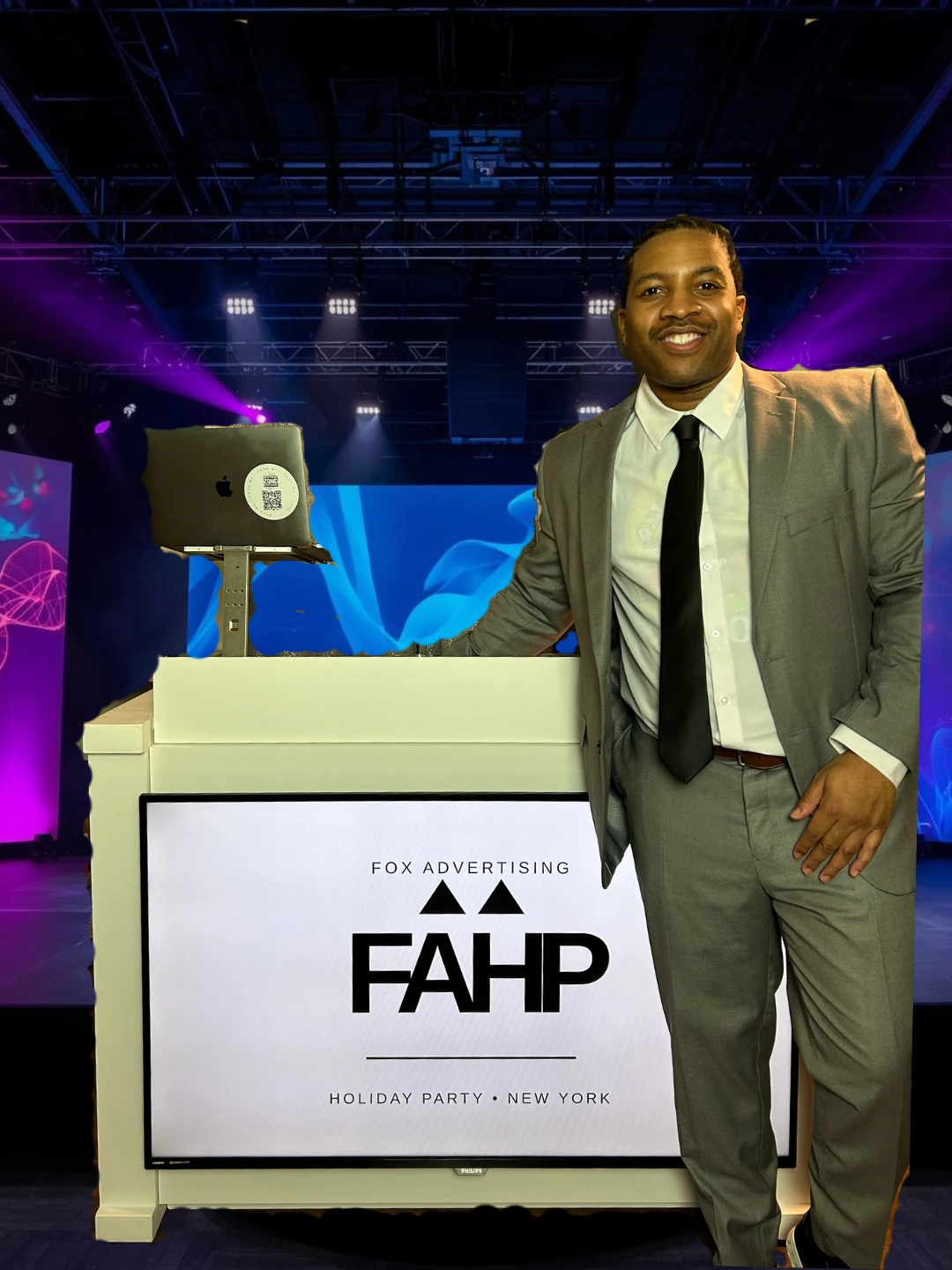
Corporate vs wedding DJ pricing is one of the most misunderstood gaps in the entertainment industry. Wedding DJs typically charge $1,000–$2,500. Corporate DJs charge $3,000–$10,000+. The difference is not arbitrary — it is scope. Here is the honest breakdown of corporate vs wedding DJ pricing and what drives the gap.
Different work.
Different stakes
Wedding DJ: if a song misses, the bride is mildly annoyed. Recover with the next track.
Corporate DJ: if the entrance music for the CEO is late, the entire program shifts. The next speaker walks on cold. Sponsor moments do not land.
That risk premium shows up in the rate.
Different preparation
Wedding DJs run on a single playlist and a list of must-plays from the couple.
Corporate DJs run on a written run-of-show with timing windows. The DJ is reading speaker cues, knowing when the keynote ends, prepping the next sting for the awards round. Preparation hours go up.
Different gear
Corporate venues have power demands wedding venues do not. Larger speaker arrays, redundant DJ controllers, backup laptops, professional wireless mic systems for emcee work, branded booth fronts. The kit costs more.
Different insurance
Corporate clients require event liability coverage up to $1M–$2M depending on the venue. Wedding clients usually do not ask. Insurance is a real line item.
Different scope of risk
A corporate event lives or dies on smooth execution. A DJ who screws up a wedding does damage to one client. A DJ who screws up a Fortune 500 event loses the client AND the agency that booked them AND every referral that came through.
That is why the pricing is structured for professionals who have the systems to deliver — not the lowest bidder.

Why Wedding DJ Pricing Is Lower Than Corporate Event DJ Pricing
Wedding DJ pricing reflects the consumer market. The customer is a couple paying out of pocket, the event has personal stakes but no professional reputation on the line, and the competitive pressure on price is intense because there are thousands of wedding DJs.
Corporate event DJ pricing reflects the B2B market. The customer is a planner whose professional reputation hinges on event execution, the event has financial and brand stakes, and the talent pool that can actually deliver corporate work is much smaller.
When a Wedding DJ Can Handle a Corporate Event (and When They Cannot)
A wedding DJ can handle a small corporate event with a relaxed program — a holiday party for under 100 people, an internal team appreciation event, a casual milestone celebration. The skill overlap is real for these events.
A wedding DJ cannot handle a Fortune 500 conference, a brand activation with content team coordination, a gala with awards segments, or any executive function where program execution is the deliverable. The systems, the gear, and the discipline are different work.
The corporate event DJ vs wedding DJ pricing gap exists because the work is different. Pay for the wedding DJ for wedding-tier events. Pay for the corporate event DJ for corporate-tier events. The mismatch in either direction is expensive.
Written by DJ Reese. I am a corporate event DJ and Event Experience Designer behind LIDL US grand openings, PUMA brand activations, and Fortune 500 corporate events. I work with corporate event planners, conference organizers, and experiential marketing agencies nationwide — NYC, DC, LA, Philly, Atlanta, and NJ.
Key Takeaways on Corporate vs Wedding DJ Pricing
Corporate vs wedding DJ pricing reflects two different jobs. Wedding DJs work from a must-play list and a couple’s vision. Corporate DJs work from a run-of-show document, brand-safe music guidelines, and live coordination with speakers and program directors.
DJ Reese has executed Fortune 500 corporate events for brands including LIDL US, PUMA, Fox Corporation, CBRE, and Adidas. Every booking applies the same operator-level approach to corporate vs wedding DJ pricing: read the room, design for the outcome, and never leave a transition to chance. For industry-level context on corporate event execution, see resources from BizBash, the leading publication for event professionals.
Related Pages on Corporate vs Wedding DJ Pricing
For more on corporate vs wedding DJ pricing and related corporate DJ topics, see: Corporate DJ Pricing Calculator, Corporate Event DJ Cost Guide, Conference & Summit DJ Services, Gala & Awards DJ Services, Brand Activation DJ Services, and Executive & Private Function DJ Services.
Frequently Asked Questions About Corporate vs Wedding DJ Pricing
Why is corporate vs wedding DJ pricing so different?
Corporate vs wedding DJ pricing differs because the scope of work differs. Corporate events require emcee work for executives, brand-safe music vetting, real-time program coordination, and operational systems for handling mid-event changes. That scope premium is why corporate DJ rates are 2-3x wedding DJ rates.
How does DJ Reese approach corporate vs wedding DJ pricing?
DJ Reese approaches corporate vs wedding DJ pricing from seven years of designing experiential events for Fortune 500 brands. The approach is operator-first: every event is treated as program execution, not a music slot. To start a conversation about corporate vs wedding DJ pricing for your next corporate event, request a planning call or use the Corporate DJ Pricing Calculator for an instant baseline estimate.
Why Corporate vs Wedding DJ Pricing Exists
The Five Scope Differences That Drive Corporate vs Wedding DJ Pricing
Corporate vs wedding DJ pricing reflects five concrete differences: written run-of-show coordination (corporate), brand-safe music vetting against a do-not-play list (corporate), emcee work for executive speakers (corporate), real-time coordination with sponsor and AV teams (corporate), and operational systems for handling mid-event program shifts (corporate). Wedding DJs work from a couples must-play list. Corporate DJs work from a 15-page run-of-show document. That scope difference is the entire story of corporate vs wedding DJ pricing.
Why Corporate vs Wedding DJ Pricing Includes Different Insurance
Corporate vs wedding DJ pricing reflects different insurance requirements. A wedding DJ typically carries $500K liability insurance. A corporate DJ working Fortune 500 events carries $1M minimum, with named additional insureds for venue and client. The annual premium difference is several hundred dollars — small on its own, but real when factored across the operating cost of a full year of bookings. Corporate vs wedding DJ pricing accounts for this baseline.
Equipment Redundancy: A Hidden Cost in Corporate vs Wedding DJ Pricing
A wedding DJ typically brings primary gear with a backup cable or two. A corporate operator brings a primary system, a fully redundant backup laptop pre-loaded with the entire library, backup speakers if budget allows, redundant microphones, and a backup power solution. That gear redundancy doubles equipment investment per booking — another reason corporate vs wedding DJ pricing is what it is. When a $50,000 sales kickoff goes dark for ten minutes because the DJs laptop crashed, the cost of a backup laptop looks small.
The Contracting Difference Behind Corporate vs Wedding DJ Pricing
Wedding DJs typically work from a one-page contract signed directly with the couple. Corporate DJs work through procurement departments, with multi-page master service agreements, vendor onboarding forms, COI submissions 14 days out, W-9s, NDAs in some cases, and net-30 or net-60 payment terms post-event. The administrative overhead per booking is several hours that wedding DJs do not absorb. Corporate vs wedding DJ pricing reflects the back-office cost of working with corporate clients.
When Wedding DJs Try Corporate (and Why It Usually Fails)
Wedding DJs occasionally cross over into corporate work — usually because corporate looks more lucrative on paper. The work environments are too different. A wedding DJ used to running a four-hour reception from a playlist struggles with corporate vs wedding DJ pricing math because they underbid the actual scope. Six months in, the wedding DJ either raises rates to match corporate market norms or quietly stops accepting corporate inquiries. The market sorts itself.
How Travel Affects Corporate vs Wedding DJ Pricing
Corporate work pulls operators across multiple metros. A wedding DJ books local. A corporate DJ flies for brand activations, multi-day conferences, and out-of-state galas. Travel time, accommodations, gear shipping, and per diem all factor into corporate vs wedding DJ pricing. A 6-hour brand activation across the country is a 3-day commitment door-to-door — billed accordingly.
The Premium That Corporate vs Wedding DJ Pricing Reflects
Strip everything else away and corporate vs wedding DJ pricing reflects one thing: risk premium. A wedding goes sideways and the couple is annoyed. A corporate event goes sideways and a six-figure marketing program ships flat. Corporate operators charge for the years of execution that allow them to handle the moments where leadership is watching the room. Wedding DJs charge for playing the playlist.
Working With an Experience Designer Behind the Booth
DJ Reese is the experience designer behind LIDL US grand openings, PUMA brand activations, Fox Corporation internal events, and Fortune 500 conferences and galas nationwide. The approach to every booking is the same: read the room in real time, design for the outcome, and never leave a transition to chance. Seven years of Fortune 500 work has refined an operational system that handles the moments where most events stall.
Why Fortune 500 Brands Book DJ Reese
Three reasons surface consistently from repeat clients. First, run-of-show fluency — every event is treated as program execution, not a music slot, and the prep work shows. Second, brand-safe execution — agencies and meeting planners can hand off the music portion of the program knowing nothing will land in the wrong tone. Third, on-stage emcee capability — Reese has opened for The Eagles and Chicago, emceed and DJed a New Kids on the Block experiential activation, and held the energy of more than 6,000 volunteers at the 9/11 Day meal pack with New York Cares. The same person who handles the music handles the mic.
What to Expect From the Planning Process
Every engagement starts with a planning call to walk through your run-of-show document, audience demographics, venue specifics, and any brand-safe music limits or do-not-play preferences. From there, transition stings get scripted to your program timing, cue sheets get prepared for every speaker handoff, and a contingency plan gets built for likely mid-event scope shifts. By the morning of your event, every cue is rehearsed and every backup is staged.
Service Areas and Travel
Primary service metros include New York, Washington DC, Los Angeles, Philadelphia, Atlanta, and the full New Jersey tri-state. Travel happens nationwide for the right project — brand activations and multi-city corporate programs travel as a matter of course. Out-of-state quotes factor in flight, ground transportation, accommodations, and shipping or rental of gear at destination. International work is handled case by case.
How to Start a Conversation
The fastest path to a real quote is the planning call. Use the contact form on this site or reach out at [email protected] with your event date, venue, guest count, and scope. For a fast-baseline number before a full conversation, the on-site pricing calculator returns a real-world estimate in under 30 seconds based on event type, length, location, and add-ons. Either path gets you to the right answer quickly.
Common Planner Questions
How early should I book for a high-profile event?
For Q4 holiday programming, lock dates in by mid-summer at the latest. For annual conferences, six to nine months out is the sweet spot. For brand activations tied to product launches, build the entertainment scope into the campaign timeline from the first agency briefing rather than treating it as a last-minute line item. The operators worth hiring tend to be booked solid 90 days out from any major date.
What information should I have ready before the first conversation?
Bring your event date, venue address, expected guest count, target start and end times, the rough run-of-show if you have one, and any brand-safe music guidelines your team operates under. If you have not written a run-of-show yet, that is fine — a good operator will help you structure one. The more specific the conversation upfront, the more accurate the eventual proposal will be.
What happens between booking and event day?
Once a contract is signed, the planning process typically includes a music brief call, a run-of-show coordination call closer to the date, a cue sheet review with your AV team if applicable, and a final pre-event check-in 48 hours out. By the morning of the event, every transition is rehearsed in advance and the contingency plan for likely scope shifts is staged.
How does day-of communication work?
One designated point person on your team owns day-of communication. Quick verbal updates handle most mid-event shifts. Major scope changes get acknowledged in writing through text or email per the contract. Comms with the AV team, venue staff, and sponsor representatives flow through the operator directly without needing you in the middle of every decision.