Mastering the Transition: How to Eliminate Dead Air at Conventions
The silence between keynote speakers is louder than you think.
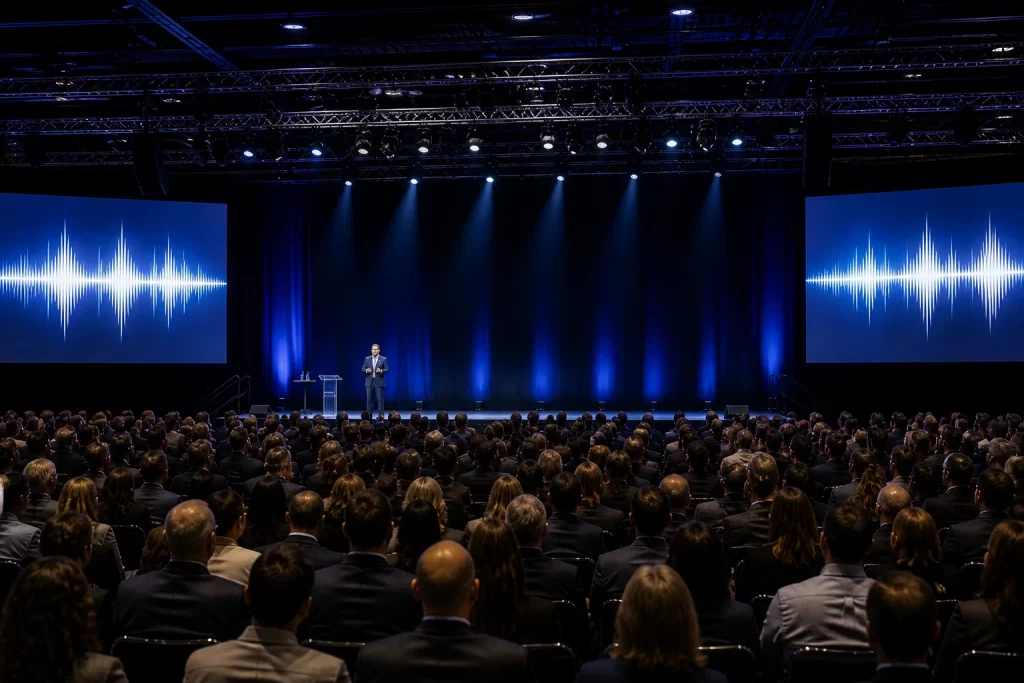
At large scale conventions, “dead air” isn’t just a lull in conversation; it’s a momentum killer. When thousands of people are left standing in a quiet hallway or sitting in a dark ballroom waiting for a tech transition, their energy plummets. They check their phones, they head for the exits, and suddenly, the atmosphere you spent months planning evaporates.
If you want to keep your attendees engaged from the opening breakfast to the closing gala, you have to treat the transitions with as much respect as the main stage talent. Here is how to eliminate dead air at conventions and keep the energy electric.
1. The Psychological Impact of Silence in Large Spaces
Before jumping into the tactics, it is vital to understand why silence is so damaging. In a room of 5,000 people, total silence feels unnatural. It creates a psychological “exit point” where the attendee is reminded of their physical discomfort, their unread emails, or the lure of the hotel bar.
When you eliminate dead air at large scale conventions, you are maintaining a “flow state.” By keeping the auditory and visual stimuli consistent, you prevent the mental “drop off” that happens when a session ends abruptly. Consistency is the difference between a professional summit and a high school assembly.
2. Implement a “Voice of God” (VOG) Narrative
The most professional way to bridge gaps is with a live or pre-recorded announcer. A VOG does more than just give directions; they provide a narrative thread for the day.
- Live vs. Recorded: A live VOG is preferred for large scale events because they can react to real time delays. If a speaker is running two minutes late, the VOG can adjust their script on the fly.
- The Scripting: Instead of silence when a session ends, a warm, authoritative voice should immediately chime in: “That was Sarah Jenkins on the future of AI. Up next, join us in Hall B for the networking mixer, don’t forget to grab a signature cocktail on your way in!”
This fills the space and tells people exactly what to do next, removing the “what now?” anxiety that often leads to people leaving the venue.
3. Curate the “In-Between” Soundscape to eliminate dead air at conventions
Music is the easiest tool to eliminate dead air at conventions, yet it’s often an afterthought. A random Spotify playlist is not a strategy.
- Walk-in/Walk-out tracks: These should be high energy and slightly faster than a resting heartbeat (around 120-130 BPM). This subconsciously tells the audience to move with purpose.
- The “Vibe” Shift: Use “stinger” music:short, 5-10 second energetic bursts the moment a speaker stops talking. This provides an audio cue that a transition is happening, masking the sound of people shuffling out of their seats.
- Zoning your audio: Don’t just pump music into the ballroom. Ensure the hallways, registration areas, and even the restrooms have a cohesive soundscape. This creates a “seamless” world where the convention feels like its own reality.
4. The Power of a Professional Emcee
A common mistake is letting a CEO or a department head handle transitions. Unless they are naturally gifted performers, they often lead to awkward silences while shuffling papers.
A professional emcee is trained specifically to eliminate dead air at conventions. If a speaker’s laptop fails or a microphone dies, a pro emcee can step in with:
- Crowd Polls: “By a show of hands, who here traveled more than 500 miles?”
- Quick Recaps: Summarizing the three biggest takeaways from the previous speaker while the tech team resets.
- Storytelling: Having a “bank” of relevant industry stories to fill a 3-minute gap.
5. Visual Stimulation and Digital Signage
When people aren’t listening, they’re looking. If there is a physical gap like a long walk between the expo hall and the breakout rooms, fill it with visual stimulation.
Use LED walls or vertical displays to show:
- Live Social Feeds: Displaying attendee photos from the event hashtag creates a sense of community.
- Countdown Clocks: A large, stylized clock counting down to the next “Main Stage Event” creates a sense of urgency.
- Speaker Highlights: Loop quotes or short video clips from earlier in the day for those who might have missed them.
6. Interactive “Micro-Moments”
Large scale conventions often fail because they are passive experiences. To kill the lull, give the audience something small to do during transitions.
- QR Code Polls: Throw a poll on the big screen: “What was your favorite takeaway from that last session?” Show the results live as they come in.
- Gamification: Use the event app to send a notification: “The first 50 people to reach the North Lounge get a free espresso.”
These micro-tasks turn a boring transition into a scavenger hunt, ensuring that dead air is replaced by active movement.
7. Tech-Proofing the Stage Transitions
Nothing creates dead air faster than a technical glitch. To truly eliminate dead air at conventions, your production team needs a “Plan B” for every transition.
- Pre-Cabling: Ensure the next speaker is mic’ed and “green-roomed” 20 minutes before their slot.
- The “Backup” Slide: Always have a “Stay Tuned” or “Network Break” slide ready to go on the main switcher if a presentation file crashes.
- Redundant Audio: Have a secondary audio source (like an iPad with a curated playlist) plugged directly into the board, ready to fade up the second a live feed cuts out.
Frequently Asked Questions (FAQ)
What is the ideal music volume for transitions?
For walk-ins, music should be loud enough to prevent private conversations from being overheard but quiet enough that two people standing next to each other don’t have to shout. Usually, 75-80dB is the sweet spot for high energy.
How do I handle a speaker who finishes 10 minutes early?
This is where your Emcee and VOG shine. Have a “Transition Kit” ready: a short video highlight reel, a live audience Q&A session, or an early push to the coffee break. Never just leave the stage empty.
Can silence ever be a good thing at a convention?
Rarely. Even during “quiet” moments, like a memorial or a heavy keynote, a low-level “ambient pad” (subtle synth or atmospheric sound) can help maintain the emotional weight without leaving the room feeling “empty.”
The Bottom Line
Dead air is a vacuum that sucks the excitement out of a room. By layering audio, visual, and human elements into your transitions, you ensure that the “spaces between” are just as valuable as the sessions themselves. When you successfully eliminate dead air at conventions, you aren’t just managing a schedule, you’re curating an experience that people will talk about long after the lights go down.