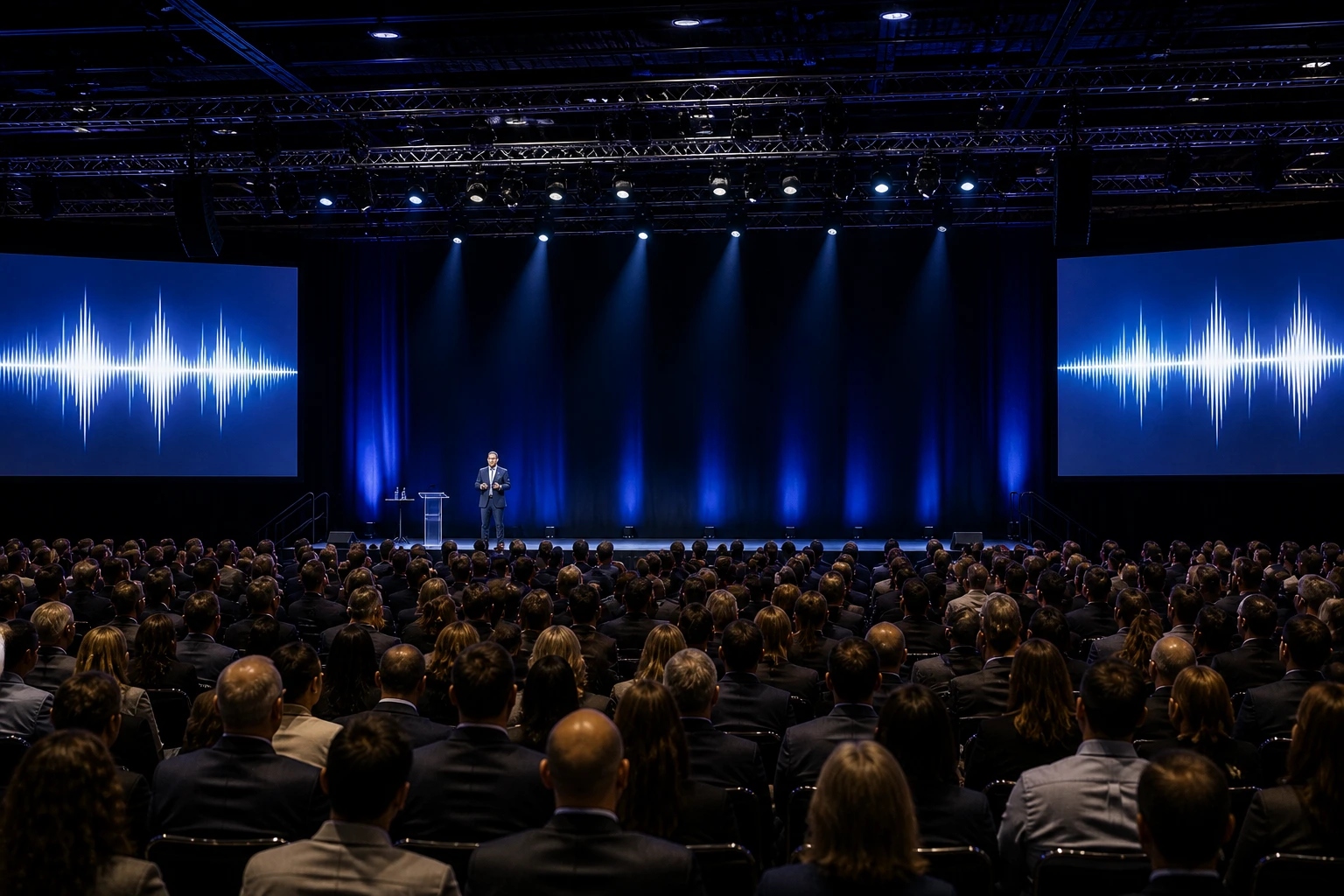
To design a memorable corporate event is to apply experience design to every minute of the program, not just the keynote. A memorable corporate event runs on a designed energy curve, scripted transitions, brand-register precision, and a closing arc that lands on purpose. The work to design a memorable corporate event lives in the operational layer most planners never see — the cue sheets, the contingency plans, the music vetting against the brand voice. Here are seven operator plays Fortune 500 brands use to design a memorable corporate event their leadership actually remembers six months later.
What It Means to Design a Memorable Corporate Event
To design a memorable corporate event is to treat the event as a designed sequence rather than a stack of agenda items. The corporate planner sets the agenda. The experience designer shapes how each agenda item lands. When you design a memorable corporate event well, leadership remembers the program as flowing. When you skip the design work, the program feels stitched together regardless of how strong the content is. The discipline to design a memorable corporate event is what separates polished Fortune 500 execution from competent-but-forgettable corporate work.
The Seven Plays to Design a Memorable Corporate Event
1. Map the Energy Curve Before the Agenda
To design a memorable corporate event from the foundation up, map the intended energy curve before the agenda is finalized. The arrival energy starts low and builds. The first keynote peak sits about thirty minutes in. Energy dips through dinner and rebuilds toward the closing remarks. Drawing this curve first lets the team design a memorable corporate event where every programming decision matches the intended emotional arc. Without the curve, the program runs on accident.
2. Script Every Speaker Transition
Speaker transitions are where most programs stall. To design a memorable corporate event that holds together through every handoff, script every transition with three elements: an outgoing acknowledgment, a narrative bridge, and a clean introduction of the next speaker. The audience never feels the transition because it has been designed to disappear. When you design a memorable corporate event with this discipline, leadership notices the speakers, not the gaps.
3. Calibrate the Brand Register
Every brand has a tone register. To design a memorable corporate event that lands inside that register, vet music selection, transition styles, and emcee scripting against the brand voice before the event date. A pharmaceutical company carries different tone constraints than a streaming platform. A federal contractor sits at different volume defaults than a tech startup. The team that wants to design a memorable corporate event matches every element to the register through pre-production work, not improvised live.
4. Stage Contingencies for Mid-Event Shifts
Programs always shift mid-event. Speakers run long. Sponsors change segment order. Awards segments get reshuffled. To design a memorable corporate event that absorbs these shifts gracefully, the operator pre-stages contingency plans. Backup intros for late speakers. Pre-scripted filler if a segment needs a one-minute hold. A clear protocol for moving content blocks. The audience never knows the program changed because the design absorbed the change.
5. Anchor the Awards or Recognition Segment
If your program includes awards or recognition, that segment is the highest-stakes window. To design a memorable corporate event that handles awards well, the operator runs walk-on music tight to the second, builds anticipation in the pauses before reveals, holds the room during acceptance speeches, and lifts energy clean as winners cross the stage. The awards segment becomes the emotional centerpiece when the design work shows up here.
6. Coordinate the Production Stack as One System
To design a memorable corporate event at premium level, the production teams operate as one system rather than parallel vendors. AV team cues match music programming. Lighting designers sync with energy curves. Content team screen reveals align with audio stings. The operator who runs the audio layer treats the rest of the production stack as peers, and the production hub coordinates the handoffs. Done right, the audience experiences a single designed program.
7. Engineer the Closing Arc
The last twenty minutes determine how leadership remembers the program. To design a memorable corporate event end-to-end, engineer the closing arc with intention. A controlled rise of energy through the final keynote. A clean handoff to the closing remarks. A music exit that leaves the room with the audience instead of fading awkwardly. Most events end on accident. The events leadership remembers end on purpose.
When You Need to Design a Memorable Corporate Event
Not every corporate program needs this level of design work. A small internal lunch meeting does not. A 250-person sales kickoff does. A 500-person annual gala does. A multi-day conference with multiple speakers and awards programming does. To design a memorable corporate event is the right move when leadership is in the room, the program runs longer than ninety minutes, and multiple production elements need coordination. At that threshold, the discipline is what separates a polished program from a clunky one.
Cost-wise, the work to design a memorable corporate event folds into the broader corporate event execution budget. A senior corporate operator who understands design charges within the $5,000-$15,000 range for a single-event engagement depending on scope. That investment covers the operational layer that prevents the seven failure modes most corporate events run into without realizing.
How to Book
The fastest path to a real conversation about how to design a memorable corporate event is the pricing calculator on this site — it returns a real-world estimate in under thirty seconds. From there, a planning call walks through your specific program and the operational layer you need.
For industry-level context, see resources from BizBash. For related operator-tone reading: experiential design for corporate events, conference and summit DJ services, gala and awards DJ services, and the corporate DJ pricing calculator.
Why Senior Planners Rebook
The clearest signal of operator quality is whether senior planners book the same person twice. DJ Reese has executed repeat engagements for LIDL US across multiple grand opening cycles, returned to PUMA brand activations on consecutive campaign cycles, and rebooked annually for Fox Corporation programs and Adidas team events. Repeat bookings happen for one reason — the operational layer holds up. The discipline shows up in every booking, and leadership notices.
Service metros include New York, Washington DC, Los Angeles, Philadelphia, Atlanta, and the full New Jersey tri-state. Travel happens nationwide. For urgent timelines, direct contact at [email protected] or (856) 538-2582 gets a same-day response. DJ Reese has been the experience designer behind LIDL US grand openings, PUMA brand activations, Fox Corporation internal programs, and Fortune 500 corporate events nationwide since 2007. Seven plus years of operator-first execution behind every booking, and 105 Google reviews at five stars to back it up.
Real Examples From Fortune 500 Programs
The discipline to design a memorable corporate event shows up in measurable outcomes when executed correctly. At a PUMA brand activation, the design work drove $75,000 in three-hour product sales because the energy curve was engineered. At 9/11 Day with New York Cares, holding the energy of 6,000+ volunteers for hours enabled the team to pack over 2 million meals. At LIDL US grand openings, foot traffic momentum translated directly into store-wide attendance. Each booking applied the same framework — read the room, design for the outcome, never leave a transition to chance.
The events that get remembered are the events where someone owned the operational layer end-to-end. The events that get forgotten are the ones where production teams stayed in their lanes and nobody connected the dots between segments. To design a memorable corporate event at Fortune 500 scale, the operator role is the connecting tissue, not a separate vendor adjacent to the production.
What Most Planners Get Wrong
The most common planner mistake is treating entertainment as a line item separate from program execution. The DJ gets booked from a different vendor list than the speakers. The emcee gets selected from on-camera talent rather than operational operators. The lighting designer never coordinates with the music programming. Each piece does its job in isolation but the room feels disconnected because nobody owned the connections between pieces. The fix is treating the operator behind the music as a peer of the producer and AV teams.
The second mistake is buying on price. A senior corporate operator who can design a memorable corporate event does not cost the same as a wedding DJ taking a corporate gig. The price gap reflects the operational scope, the brand-safe music vetting, the pre-event prep time, the real-time room reads, and the contingency planning. Buying the cheaper option to save $1,500 on a $50,000 corporate program is the budget decision that creates the forgettable-event experience.
What Goes Into the Pre-Event Planning Call
The pre-event planning call is where the framework gets built. The operator walks through the run-of-show document line by line. Speaker handoff timing. Awards segment cadence. Sponsor activation moments. Brand-safe music limits. Audience demographic notes. Venue specifics. Out of that call comes the cue sheet, the transition sting script, the pre-staged backup library, and the contingency plan for the most likely mid-event shifts. By the morning of the event, every cue is rehearsed and every backup is staged.
Planners new to working with a senior operator sometimes ask whether all this prep work is necessary. The honest answer is that the prep is what makes the on-event execution invisible. To design a memorable corporate event requires the framework. Without it, the operator improvises during the event, which the audience feels even if they cannot name what is wrong.
Frequently Asked Questions
How early should we book to design a memorable corporate event?
Lock in senior operators sixty to ninety days before event date for premium dates. Q4 and Q1 fill earliest. For major galas at premium venues, four to six months out is the safer planning window.
Can we design a memorable corporate event on a tight budget?
Yes — the design discipline scales. Smaller programs benefit from the same energy curve and transition scripting work that larger programs use. The operator rate adjusts to scope.
Service metros include New York, Washington DC, Los Angeles, Philadelphia, Atlanta, and the full New Jersey tri-state area. Travel happens nationwide for the right project. For urgent timelines, direct contact at [email protected] or (856) 538-2582 gets a same-day response.
One last operational note for senior planners: the prep work invisible to the audience is what makes the on-event execution feel effortless. Without it, the operator improvises during the event, which the audience feels even if they cannot name what is wrong. With it, the audience experiences a program that feels intentional from arrival to load-out. The discipline is the difference between events leadership remembers and events that just happened.
Programs that hit this standard tend to repeat year after year with the same operator. Senior planners who have run events for years and never want to ask why the room slipped about their own programs converge on the same operator profile — someone who works the energy curve as a discipline, scripts every transition, runs brand-vetted music libraries, has systems for mid-event shifts, anchors the awards segment, and engineers the closing arc on purpose. That operator profile is who delivers programs leadership remembers.
Bottom line: the discipline behind the room is what produces the events leadership remembers. The cue sheets, the brand-vetted music, the contingency plans, the closing arc — these add up to programs that read as polished from arrival to load-out. The events that get rebooked year over year are the ones where this discipline shows up in every booking.
One last note for senior planners: the operator hire is the connecting tissue. Without it, every other production element does its job in isolation and the room feels disconnected. With it, the program reads as one designed experience from arrival to load-out.
The discipline scales to any program size. Smaller programs benefit from the same framework. Larger programs need it as a baseline. Either way, the operator who owns the layer is the difference-maker.