Most audience engagement ideas for corporate events that circulate online are recycled wedding vendor tactics or generic event blog filler. The audience engagement ideas for corporate events that actually drive measurable outcomes come from Fortune 500 execution, they treat engagement as engineered crowd flow, energy curve management, and brand-safe activation rather than as a list of party tricks. Here are seven audience engagement ideas for corporate events drawn from real operator work, not generic event blog advice.
The Seven Real Audience Engagement Ideas for Corporate Events
1. Engineer the Arrival Energy
The most overlooked of all audience engagement ideas for corporate events: the arrival window. Energy that pulls attendees in from doors-open through to the first speaker sets the tone for the entire program. The audience that arrives to a designed energy register engages differently than the audience that arrives to silence or generic background music. Among audience engagement ideas for corporate events, this one costs nothing extra and changes everything.
2. Script Speaker Walk-Ons Tight
Walk-on music is one of the most powerful audience engagement ideas for corporate events that nobody talks about. The right track at the right second lifts the room before the speaker says a word. The audience leans in. Recipients of awards feel honored. Keynote speakers walk on with momentum. Among audience engagement ideas for corporate events, tight walk-on scripting punches above its weight.
3. Use the Awards Pause Deliberately
The deliberate pause before an award name is read is among the most underrated audience engagement ideas for corporate events. Two to four seconds of silence as the music dips, the screen content holds, and the audience leans forward. The pause is the difference between an award that feels significant and one that feels routine. Recipients remember the pause.
4. Build a Sponsor Moment That Lands
Sponsor activation done well is one of the higher-value audience engagement ideas for corporate events. Heavy-handed sponsor moments break room flow. Designed sponsor moments — with their own micro energy curve and transition handling — get sponsors the impressions they paid for while keeping audience attention. Among audience engagement ideas for corporate events, this is the play that satisfies both sides of the equation.
5. Run Real-Time Energy Reads
The operator running fifteen-minute room checks is delivering one of the most valuable audience engagement ideas for corporate events even when the audience never sees the work. Where is the room looking? Is energy building or thinning? The continuous adjustment is what keeps the program from going flat between obvious peaks. Most audience engagement ideas for corporate events ignore this — and most programs go flat as a result.
6. Design the Closing Arc on Purpose
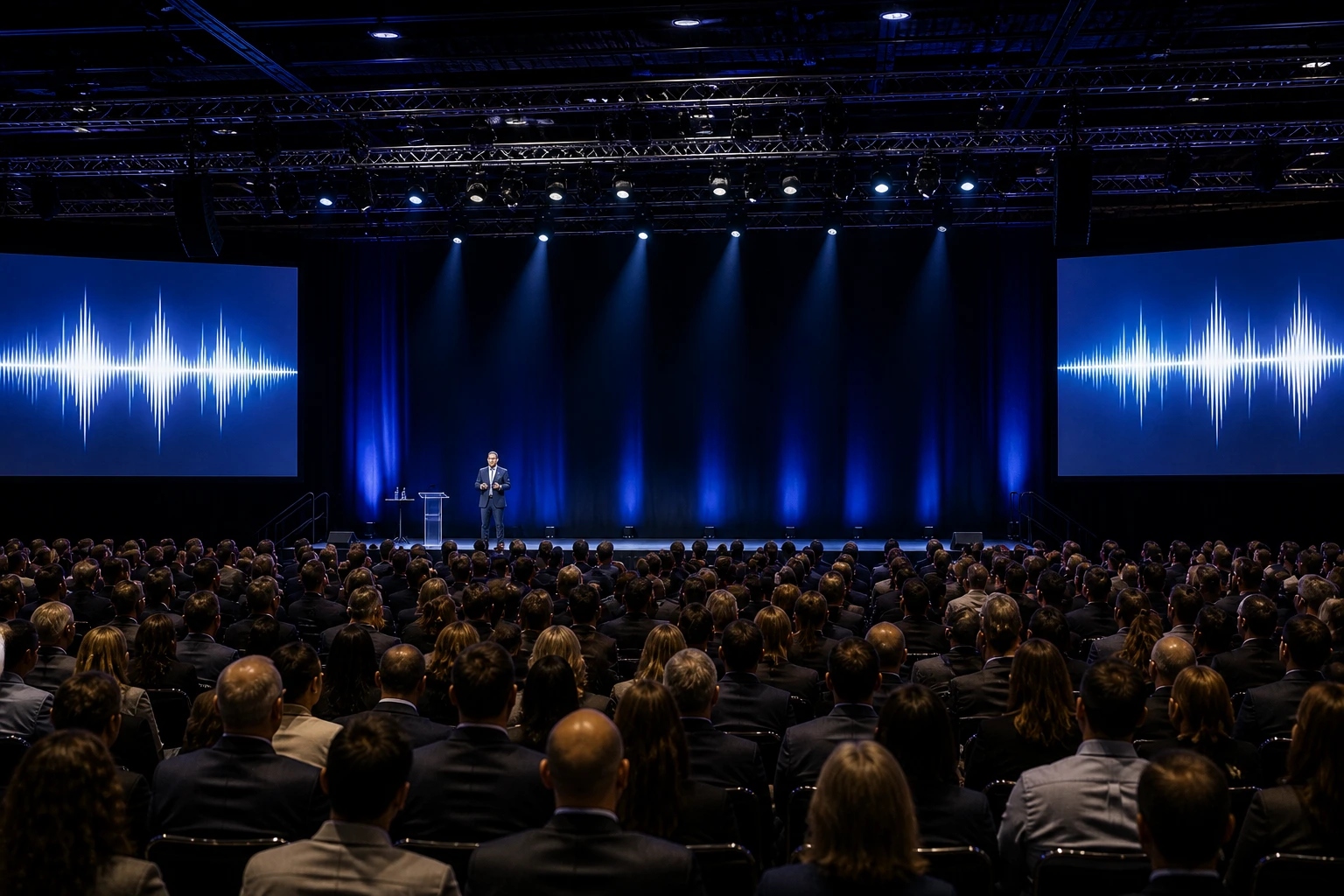
The closing arc is one of the most program-defining audience engagement ideas for corporate events. The last twenty minutes determine what attendees take into the next day. Engineered properly — a rise of energy through the final keynote, a clean handoff, an exit track that leaves the room together — the closing makes the entire program feel designed. Among audience engagement ideas for corporate events, this one shapes the post-event memory more than any other.
7. Brand-Vet the Music Library
Among the operational audience engagement ideas for corporate events, brand-safe music vetting matters more than the entertainment industry admits. Tracks vetted for lyrics, artist controversy, and brand-tone fit before the event date. A pre-cleared library calibrated to the brand register. Most audience engagement ideas for corporate events ignore this layer entirely — and one off-tone track in a senior leadership room can undo every other engagement play in the program.
Why Most Audience Engagement Ideas for Corporate Events Fail
Most audience engagement ideas for corporate events floating around event blogs fail because they were written by people who have never run a corporate room with leadership in it. Photo booths, scavenger hunts, ice breakers; these are activities, not engagement design. Real audience engagement ideas for corporate events live in the operational layer between segments, in the energy curves, in the run-of-show coordination. The activities are the surface. The engagement design is the foundation.
At a PUMA brand activation, the audience engagement ideas for corporate events that drove $75,000 in three-hour product sales were not gimmicks — they were the energy curve, the dwell-zone programming, and the brand-vetted music library calibrated to the audience demographic. At 9/11 Day with New York Cares, the audience engagement ideas for corporate events that held 6,000+ volunteers for hours were operational, not activity-based. The events that get remembered apply these audience engagement ideas for corporate events through pre-production work, not on-the-fly improvisation.
How to Apply These Audience Engagement Ideas for Corporate Events
The fastest path to applying these audience engagement ideas for corporate events in your next program is a planning call with an operator who works in this discipline. Use the pricing calculator on this site to get a real-world estimate in under thirty seconds, then schedule the call. The full proposal includes the design framework, run-of-show coordination plan, and program-specific scope.
For industry-level context on event execution standards, see resources from BizBash. For related operator-tone reading: experiential design for corporate events, keep energy up at corporate events, why corporate events fall flat, and the corporate DJ pricing calculator.
Why Repeat Clients Keep Booking
The clearest signal of operator quality is whether senior planners book the same person twice. DJ Reese has executed repeat engagements for LIDL US across multiple grand opening cycles, returned to PUMA brand activations on consecutive campaign cycles, and rebooked annually for Fox Corporation programs and Adidas team events. Repeat bookings happen for one reason — the operational layer holds up. The engagement ideas above show up in every booking, calibrated to the specific program.
What Most Operators Get Wrong in This Lane
The most common failure mode is treating engagement as a list of activities to execute. Photo booths, scavenger hunts, ice-breakers, polling apps. These are surface tactics. They work in isolation but they do not solve the underlying engagement problem when the room itself feels disconnected. The operator who runs the music portion of the program and the operator who runs the activity portion are usually different people, and the disconnect between them is exactly where audience attention falls through the cracks.
The second failure mode is over-relying on the keynote speaker to carry engagement. Strong keynotes lift the room for thirty to forty-five minutes. The other four hours of the program need their own engagement layer. Operators who plan around the keynote alone leave the audience to fend for itself during transitions, networking blocks, awards segments, and closing remarks. The engagement work has to span the full program, not just the marquee moments.
Real Examples From Fortune 500 Work
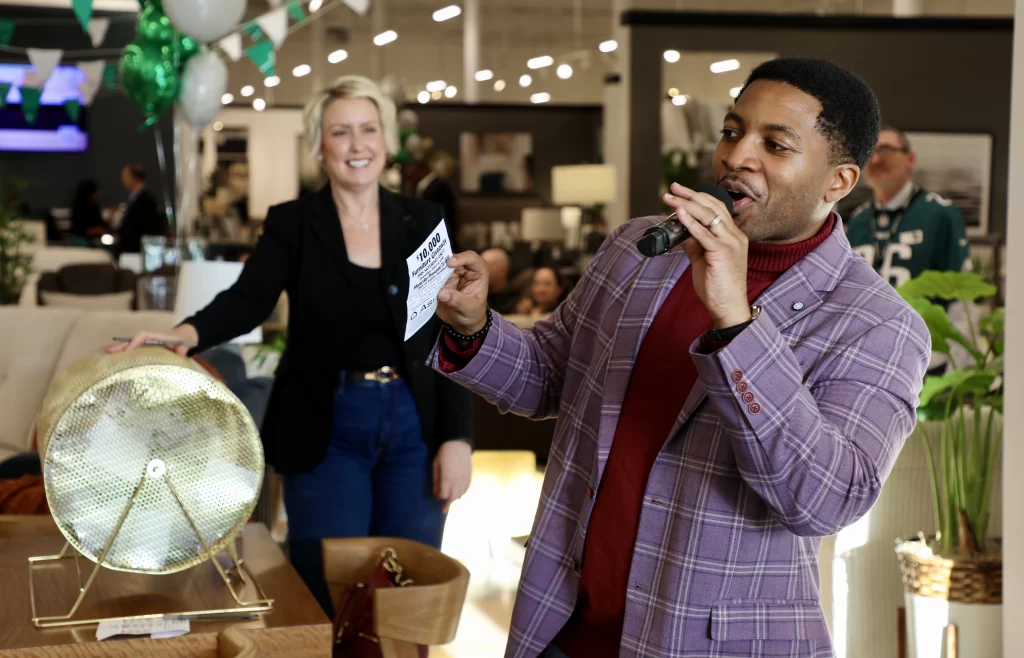
At a PUMA brand activation, the engagement work was the dwell-zone programming that drove $75,000 in three-hour product sales. At 9/11 Day with New York Cares, holding the energy of 6,000+ volunteers for hours enabled the team to pack over 2 million meals. At LIDL US grand openings, foot traffic momentum at the door translated into store-wide attendance. Each booking demonstrated the same operator framework — read the room, design for the outcome, never leave a transition to chance. The engagement tactics were operational, not activity-based.
What Goes Into the Pre-Event Planning Call
The pre-event planning call is where the engagement framework gets built. The operator walks through the run-of-show document line by line. Speaker handoff timing. Awards segment cadence. Sponsor activation moments. Brand-safe music limits. Audience demographic notes. Venue specifics. Out of that call comes the cue sheet, the transition sting script, the pre-staged backup library, and the contingency plan for the most likely mid-event scope shifts. By the morning of the event, every cue is rehearsed and every backup is staged.
Planners new to working with a senior operator sometimes ask whether all this prep work is necessary. The honest answer is that the prep is what makes the on-event engagement feel effortless. Without it, the operator improvises during the event, which the audience feels even if they cannot name what is wrong. With it, the audience experiences a program that feels designed without ever noticing the design.
Frequently Asked Questions
How much does this work cost?
Senior corporate operators typically charge $5,000 to $10,000 for a single-event engagement that includes the full operational layer. The investment reflects the pre-event prep, the on-event execution, and the brand-vetted music libraries that prevent the most common engagement failures.
How early should we book?
Lock in senior operators sixty to ninety days before event date for premium dates. Q4 holiday season and Q1 conference season fill earliest. For major galas at premium venues, four to six months out is the safer planning window.
Can these tactics work for smaller events?
Yes — the discipline scales. Smaller programs benefit from the same operational framework that larger programs use. The operator rate adjusts to scope.
Service Areas and How to Start the Conversation
Primary service metros include New York, Washington DC, Los Angeles, Philadelphia, Atlanta, and the full New Jersey tri-state area. Travel happens nationwide for the right project — major galas, multi-day conferences, brand activations, and signature corporate programs travel as a matter of course. Out-of-state quotes factor in flight, ground transportation, accommodations, and any gear shipping or rental at destination.
For urgent timelines, direct contact at [email protected] or (856) 538-2582 gets a same-day response. DJ Reese has been the experience designer behind LIDL US grand openings, PUMA brand activations, Fox Corporation internal programs, and Fortune 500 corporate events nationwide since 2007. Seven plus years of operator-first execution behind every booking, and 105 Google reviews at five stars to back it up.
A Note on Timing
Q4 holiday party season and Q1 conference season are the busiest stretches on the corporate event calendar. Lock in senior operators six months out for premium dates. Multi-day national conferences at major venues often book operators nine to twelve months in advance. The smartest planners run their operator booking on the same timeline as their venue booking, which removes the late-stage scramble to find a senior-grade operator after the rest of the production stack is locked.
One last operational note for senior planners: the prep work invisible to the audience is what makes the on-event execution feel effortless. Without it, the operator improvises during the event, which the audience feels even if they cannot name what is wrong. With it, the audience experiences a program that feels intentional from arrival to load-out. The discipline is the difference between events leadership remembers and events that just happened.
One last operational note: the engagement work shows up in the planning call, not in last-minute activity selection. Operators booked early have time to do the brand vetting and audience reads that make engagement feel intentional. Operators booked late default to whatever works generically. The booking timeline shapes everything downstream.
Bottom line: real engagement work is operational. The tactics on activity-blog lists are surface noise. The seven plays above show up in every well-run Fortune 500 program and are absent from most generic event work. The difference is the operator profile, not the activity selection.
Senior planners reading proposals can spot the difference quickly. Operators who talk about the energy curve, the brand register, and the run-of-show coordination are in this lane. Operators who lead with photo booths and ice-breakers are not. The conversation tells you everything.
For Q4 holiday season and Q1 conference season, senior operator availability tightens. Locking in early is the difference between getting the right hire and accepting whoever is left. Smart planners book the operator first and let the rest of the production stack form around that hire.
Service metros include New York, Washington DC, Los Angeles, Philadelphia, Atlanta, and the full New Jersey tri-state. Travel happens nationwide. For urgent timelines, direct contact at [email protected] or (856) 538-2582 gets a same day response. DJ Reese has been the experience designer behind LIDL US grand openings, PUMA, Adidas and Tilly’s brand activations, Fox Corporation and Horizon Health programs, 911 Day National program and Fortune 500 corporate events nationwide since 2007.