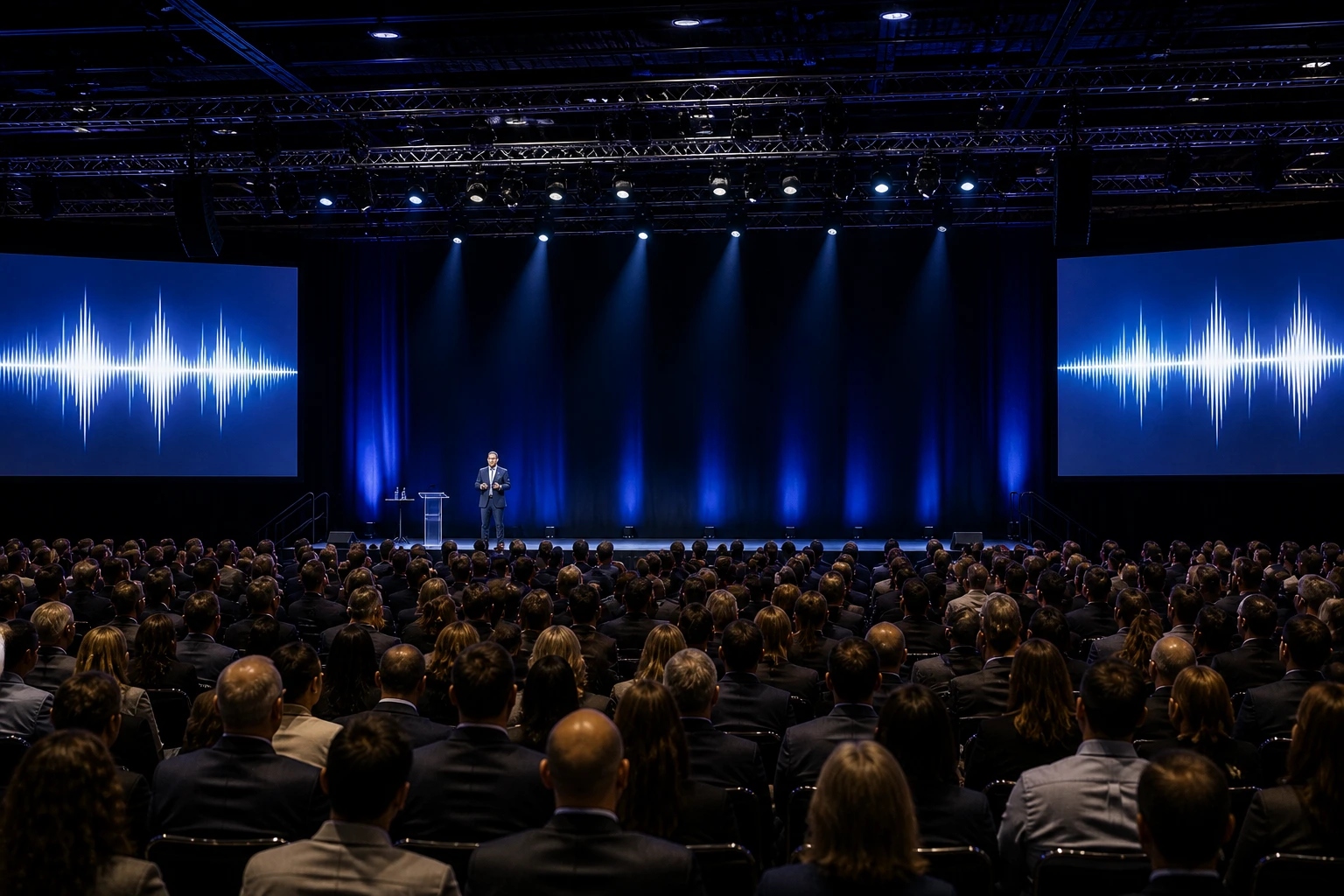
Emcee vs host for a corporate event is one of the most misunderstood operational decisions in corporate event planning. The titles get used interchangeably, but the roles operate at completely different depths. Emcee vs host for a corporate event boils down to one question: does your program need someone who reads from a script, or someone who runs the room. This guide walks through what each role actually does, when each fits, and why the choice between emcee vs host for a corporate event determines whether your program runs as designed or stalls between segments.
What the Emcee Role Actually Covers
In the emcee vs host for a corporate event distinction, the emcee runs operational program control with a microphone. Pre-event script work. Real-time room reads. Speaker handoff timing tight to the second. Awards segment pacing. Coordination with the AV team on cue handoffs. The emcee is the operational layer that holds the program together across hours of segments. The visible work is on stage. The invisible work is the entire reason the on-stage moments land cleanly.
The emcee in the emcee vs host for a corporate event split also reads the brand register. Tone calibrated to the audience. Language matched to the corporate voice. Walk-on energy matched to each speaker. A generic event-emcee voice signals immediately to senior planners that the operator is in the wrong lane. The emcee role is closer to a stage manager with a microphone than to a public-speaking gig.
What the Host Role Actually Covers
The host side of emcee vs host for a corporate event runs lighter. The host reads from a script, introduces speakers using pre-written copy, and typically steps off the stage between segments. The host adds polish but does not actively run the room. Most corporate event hosts are voice talent or presenter talent — people with on-camera experience who can deliver scripted content cleanly. They are not operational program managers, and they are not expected to be.
In the emcee vs host for a corporate event decision, the host is the right fit for programs that already have heavy AV and production support. The AV team runs the cues. The producer runs the timing. The host delivers the scripted narration on top. This setup works when the production layer is robust and the program is heavily pre-produced. It does not work when the program needs real-time room management.
The Operational Differences Between Emcee vs Host for a Corporate Event
Pre-Event Prep Depth
In the emcee vs host for a corporate event preparation comparison, the emcee runs deep prep — cue sheets, transition stings, pre-staged backup plays, brand register calibration. The host runs script prep — reading through the provided copy, marking pronunciations, rehearsing delivery. Both are professional disciplines, but they require different time investments. A senior emcee preps for ten to fifteen hours behind the scenes for a four-hour event. A senior host preps for one to two hours.
Real-Time Decision-Making
The biggest gap in emcee vs host for a corporate event is real-time decision-making authority. The emcee can adjust the program live — extend a segment, compress a transition, move an award to a later block, hold the room for a speaker arriving late. The host cannot. The host needs producer guidance for any deviation from script. In high-pressure corporate programs where leadership is watching, the difference in real-time authority becomes the difference in whether the program holds together.
Coordination With Production Teams
The emcee in the emcee vs host for a corporate event setup syncs directly with the AV and content teams. The host coordinates through the producer. When the program needs tight cue handoffs between music, lighting, screen content, and microphone, the emcee handles those handoffs as a peer of the AV crew. The host receives them as a deliverable. Both can produce great events. They produce great events through different operational structures.
Music and DJ Integration
Senior emcees in the emcee vs host for a corporate event lane often also run the music portion of the program. Walk-on tracks, transition stings, bridge music between segments, closing arc — the same operator handles both. The host does not DJ. The music is a separate vendor. This adds coordination cost but lets each role specialize.
When You Need an Emcee vs a Host
The emcee vs host for a corporate event decision usually comes down to program scope and production support. Need an emcee when: the program runs longer than ninety minutes, multiple production elements need coordination, leadership is in the room watching, awards programming is involved, or the run-of-show is likely to shift mid-event. Need a host when: the program is heavily pre-produced, the AV and producer layer is already deep, the deliverables are scripted, and on-camera polish is what the brand is paying for.
For most senior corporate planners running annual programs, the emcee in the emcee vs host for a corporate event split is the right hire. The emcee removes operational friction that the planner would otherwise absorb. The host adds polish on top of an already-functioning production stack but does not reduce planner workload during the event itself.
Pricing Differences in Emcee vs Host for a Corporate Event
Pricing in the emcee vs host for a corporate event comparison reflects scope. Senior corporate emcees who also run the music portion typically charge $4,000-$9,000 for a half-day to full-day program. Senior corporate hosts charge $3,000-$8,000 depending on the script length and on-camera reputation. Both ranges can scale higher for multi-day programs, premium venues, and major-brand engagements. The cost reflects the operational scope, not just the on-stage time.
How to Book the Right Role for Your Program
The fastest path to a real quote is the pricing calculator on this site — it returns a real-world estimate in under thirty seconds based on event type, length, location, and add-ons. From there, a planning call walks through the run-of-show, the program scope, and the right role for your specific event. The full proposal arrives within forty-eight hours.
For industry-level context on emcee and host execution standards, see resources from BizBash, the leading publication for event professionals. For related operator-tone reading, see: conference and summit DJ services, gala and awards DJ services, executive and private function DJ services, and the corporate DJ pricing calculator.
Frequently Asked Questions
Can the same person serve as both emcee and host?
Yes — most senior corporate operators in the emcee vs host for a corporate event lane handle both roles depending on the program. The operator brings either the deep operational layer or the lighter scripted-delivery layer based on what the program actually needs. The same person, two different gears.
Does the title actually matter on the contract?
What matters in emcee vs host for a corporate event contracting is the scope of work, not the title. The contract should specify: pre-event prep hours, on-stage hours, real-time authority during the program, coordination expectations with AV and producer teams, and music handling. Title alone tells you nothing.
How early should we book either role?
For senior operators in the emcee vs host for a corporate event lane, lock in sixty to ninety days out for premium dates. Q4 and Q1 fill earliest. For major galas at premium venues, four to six months out is the safer planning window.
Why Senior Planners Rebook
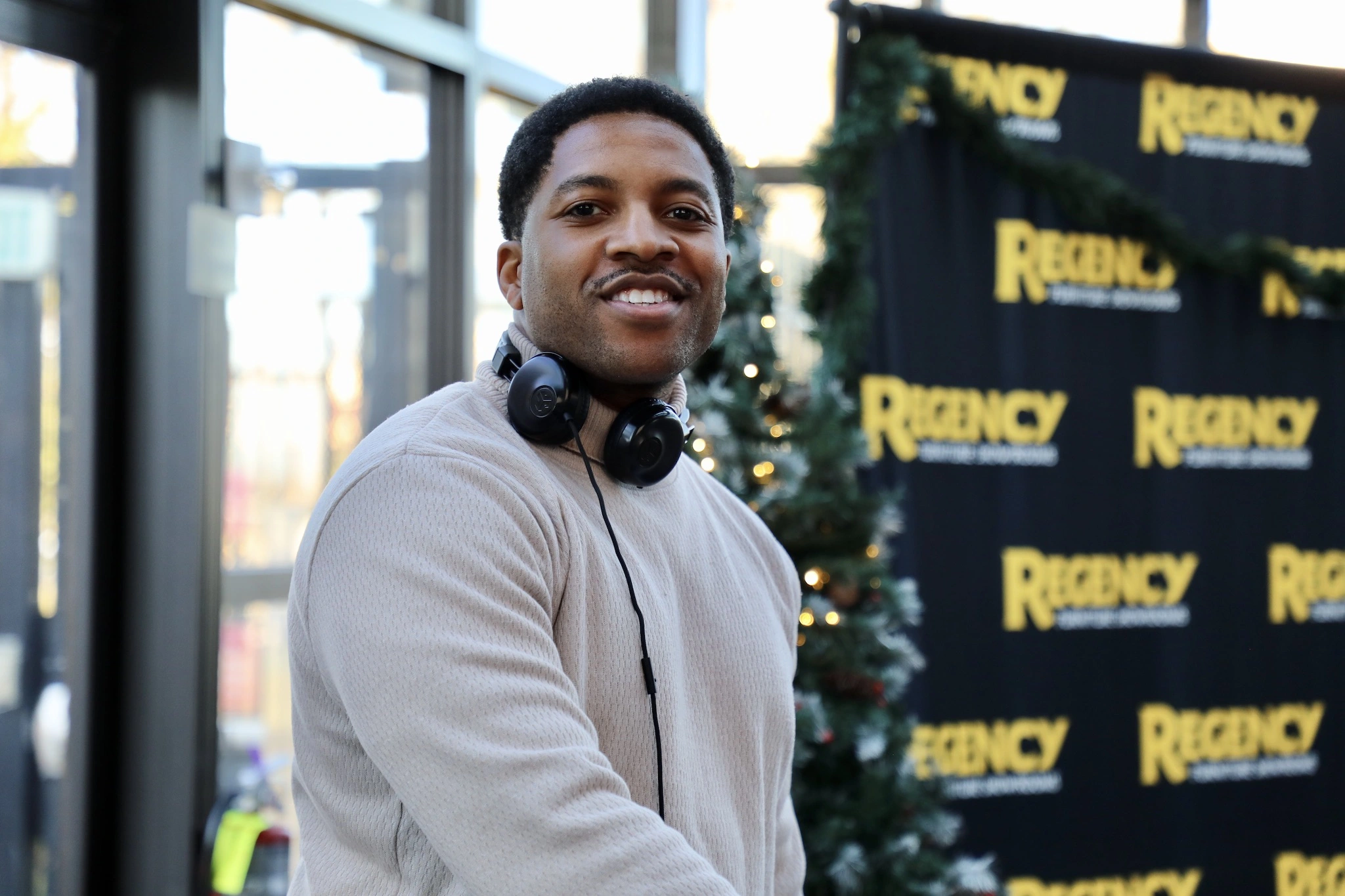
The clearest signal of operator quality is whether senior planners book the same person twice. DJ Reese has executed repeat engagements for LIDL US across multiple grand opening cycles, returned to PUMA brand activations on consecutive campaign cycles, and rebooked annually for Fox Corporation programs. Repeat bookings happen for one reason — the operational layer holds up. Run-of-show coordination is reliable. Mid-event scope shifts get handled without escalation. The room flow is intentional from arrival to load-out.
Senior planners do not have time to babysit a vendor. They book operators who handle the entire scope independently and surface only what genuinely requires their attention. Service metros include New York, Washington DC, Los Angeles, Philadelphia, Atlanta, and the full New Jersey tri-state. Travel happens nationwide for the right project. For urgent timelines, direct contact at [email protected] or (856) 538-2582 gets a same-day response. DJ Reese has been the experience designer behind LIDL US grand openings, PUMA brand activations, Fox Corporation internal programs, and Fortune 500 corporate events nationwide since 2007. Seven plus years of operator-first execution behind every booking, and 105 Google reviews at five stars to back it up.
What Goes Into the Pre-Event Planning Call
The pre-event planning call is where the framework gets built. The operator walks through the run-of-show document line by line. Speaker handoff timing. Awards segment cadence. Sponsor activation moments. Brand-safe music limits. Audience demographic notes. Venue specifics. Out of that call comes the cue sheet, the transition sting script, the pre-staged backup library, and the contingency plan for the most likely mid-event scope shifts. By the morning of the event, every cue is rehearsed and every backup is staged.
Planners new to working with a senior operator sometimes ask whether all of this prep work is necessary for a smaller event. The honest answer is that the prep is what makes the on-event execution invisible. Without it, the operator improvises during the event, which the audience feels even if they cannot name what is wrong. With it, the audience experiences a program that feels designed without ever noticing the design. That perception gap is the entire reason senior corporate operators charge premium rates.
Service Areas and Travel
Primary service metros include New York, Washington DC, Los Angeles, Philadelphia, Atlanta, and the full New Jersey tri-state area. Travel happens nationwide for the right project — major galas, multi-day conferences, brand activations and signature corporate programs travel as a matter of course. Out-of-state quotes factor in flight, ground transportation, accommodations, and any gear shipping or rental at destination.
How to Decide Between the Two
The decision usually comes down to who absorbs operational risk on event day. The senior operator who runs program control end-to-end absorbs that risk. The host who delivers scripted content passes the risk to the producer and AV team. Both paths can produce great corporate events. The right choice depends on which team is in the strongest position to carry the risk on event day, and which choice removes the most friction from the planner running the broader program.
The Bottom Line on Emcee vs Host for a Corporate Event
The choice in emcee vs host for a corporate event is really a choice about where operational risk lives during the program. The emcee absorbs the risk by running the room directly. The host delegates the risk back to the producer team and AV crew. Both can work — but only one of them works when the program is heavy, the audience is senior, and the run-of-show is likely to shift mid-event. For Fortune 500-grade corporate work, the emcee path is typically the right answer in the emcee vs host for a corporate event question.
For brand-led activations, broadcast-quality productions, and heavily-scripted programs where the production stack is robust, the host path works fine. The emcee vs host for a corporate event decision should match the production layer you actually have, not the title that sounds better on the contract. Senior planners learn this difference the hard way the first time they book the wrong role for a program that needed the other one.
One last operational note for senior planners deciding between emcee vs host for a corporate event: the right hire is the one your run-of-show actually needs, not the title that sounds better on the contract or the budget line. Most senior corporate planners who have run the emcee vs host for a corporate event decision both ways arrive at the same conclusion — the operator who runs the room beats the host who reads the script when leadership is watching and the stakes are real. That is the entire lesson behind the emcee vs host for a corporate event distinction. Get the scope right and the choice writes itself.